

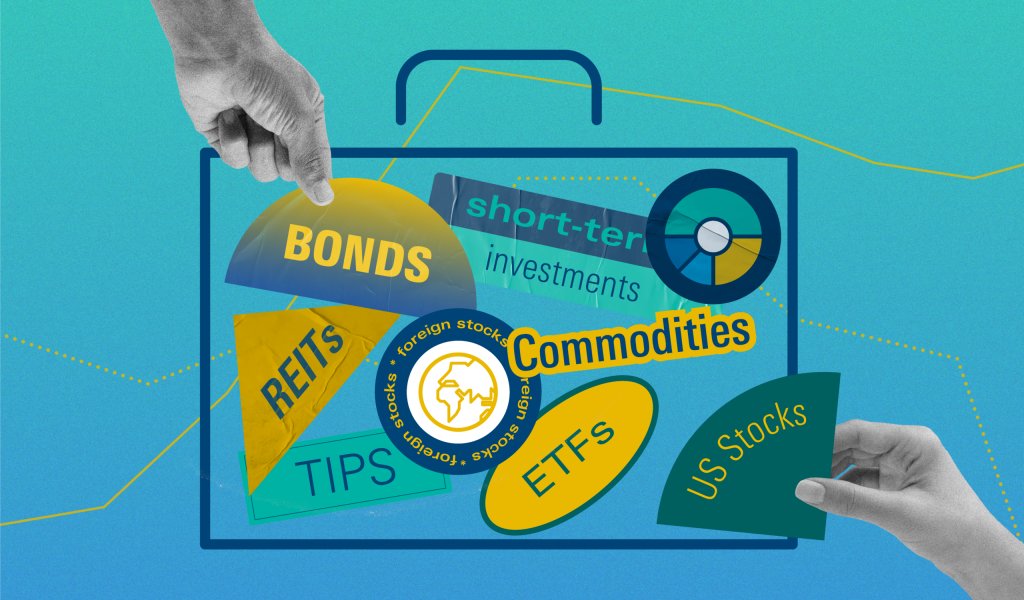
Managing money wisely is a goal shared by millions of Bangladeshis — from salaried workers and business owners to farmers and professionals. One of the most important principles of good financial management is diversification: spreading money across different types of investments rather than concentrating it in a single place.
In Bangladesh, many people have traditionally kept their savings in bank deposits or invested in land and property. These choices offer a degree of safety and familiarity. But they do not always produce the best financial outcomes. A bank deposit may provide a predictable return but may lose real value during periods of inflation. Property can appreciate in value but cannot be sold quickly when cash is needed.
Diversification helps address these limitations. By spreading investments across stocks, mutual funds, and property, an investor reduces the risk that any single poor-performing asset will seriously damage their overall financial position. Different types of assets tend to perform differently under different economic conditions. When one goes down, another may hold steady or go up.
This article explains what asset diversification means, how it works in Bangladesh’s investment environment, and how investors can use stocks, mutual funds, and property together to build a more balanced and resilient financial position.
What Is Asset Diversification and Investment Strategy in Bangladesh?
Asset diversification is the practice of investing money in more than one type of asset. The aim is to reduce risk. If all of a person’s money is in one investment and that investment loses value, the person suffers a large loss. If the money is spread across several different investments, a loss in one area is partly offset by stability or gains in others.
An investment strategy is a plan for how to allocate money across different types of assets. A good strategy takes into account the investor’s goals, time horizon, risk tolerance, and financial situation. Different investors have different needs. A young professional saving for the long term may take more risk than a retired person who needs stable income.
In Bangladesh, the main asset classes available to individual investors are bank deposits and savings instruments, stocks listed on the Dhaka Stock Exchange and the Chittagong Stock Exchange, mutual funds managed by licensed fund managers, real estate including residential and commercial property and land, gold and other physical assets, and government savings certificates issued by the National Savings Directorate.
According to the Bangladesh Bank, the financial sector in Bangladesh has been expanding. More investment products and financial services are becoming available to individual savers and investors. This expanding choice makes diversification both more important and more practical for ordinary investors.
History and Background of Investment in Bangladesh
Investment culture in Bangladesh has evolved significantly since independence in 1971. In the early decades after independence, the formal investment market was limited. Most people kept savings in state-owned banks or invested in land. The stock market was small and inactive, and mutual funds did not yet exist.
The Dhaka Stock Exchange (DSE) was established in 1954, before independence, and the Chittagong Stock Exchange (CSE) was established in 1995. However, active participation in these markets by ordinary investors was limited for many years. Market activity was dominated by institutional and large individual investors.
National Savings Certificates became a popular savings tool in Bangladesh starting in the 1980s. These government-backed instruments offered guaranteed returns and were accessible to ordinary savers. They remain popular today, particularly among risk-averse investors seeking predictable income.
Mutual funds began to develop in Bangladesh during the 1990s. The Securities and Exchange Commission of Bangladesh (BSEC) has progressively strengthened the regulatory framework governing both stock market activity and mutual funds. The number of registered mutual funds has grown over the decades, offering more options for investors seeking managed portfolios.
The stock market crash of 2010 and 2011 was a defining moment for Bangladesh’s investment community. Share prices fell sharply, and many small investors suffered significant losses. This event highlighted the risks of concentrated stock market investment and increased awareness of the importance of diversification and careful risk management.
In subsequent years, regulatory reforms and investor education initiatives aimed to rebuild confidence in the capital markets. The BSEC introduced new rules to improve transparency and protect retail investors. The mutual fund industry also expanded, giving investors access to professionally managed diversified portfolios.
Current Investment Landscape in Bangladesh
Bangladesh’s investment landscape in 2026 offers more options than at any previous time. Individual investors can access the stock market through brokerage accounts, invest in a growing range of mutual funds, buy physical and digital gold, invest in property, and hold government savings instruments.
The Dhaka Stock Exchange is the primary stock market in Bangladesh. It lists hundreds of companies across sectors including banking, garments, pharmaceuticals, cement, telecommunications, and food and beverages. The DSE has been working to modernise its systems and attract more retail investors.
The mutual fund industry is regulated by the Bangladesh Securities and Exchange Commission (BSEC). There are both open-end and closed-end mutual funds available, managed by licensed asset management companies. These funds invest in stocks, bonds, and government securities, providing investors with diversified exposure to the capital markets.
Property remains one of the most trusted investment types for Bangladeshis. Dhaka’s real estate market is active, with demand for both residential and commercial property. Many investors hold a combination of property and financial assets.
Government National Savings Certificates are still widely held, particularly by small savers and retired individuals. They offer guaranteed returns backed by the government, making them a low-risk complement to higher-risk investments like stocks.
Economic Importance of Asset Diversification
When individuals diversify their investments, they contribute to the stability and development of the broader financial system. Money invested in stocks funds businesses and creates economic activity. Money invested in mutual funds channels capital toward productive uses in the economy. Property investment supports the construction sector and housing supply.
A more diversified investor population also reduces systemic risk in financial markets. When all investors concentrate their money in a single asset class, price swings in that class can be amplified and destabilising. Diversified investors tend to hold assets through downturns rather than panic-selling, which contributes to market stability.
For individual households, diversified investment portfolios provide greater financial security. Families with assets spread across property, financial investments, and savings instruments are better placed to withstand economic shocks such as job losses, medical emergencies, or periods of high inflation.
According to Trading Economics – Bangladesh, Bangladesh has experienced consistent economic growth. As incomes rise, more households have surplus capital to invest. Educating this growing investor class about diversification supports more stable wealth accumulation and reduces inequality over the long term.
Key Asset Types for Diversification in Bangladesh
1. Stocks and Equity Investment
A stock, also called a share or equity, represents part ownership of a company. When a person buys shares in a company listed on the Dhaka Stock Exchange, they become a part-owner of that company. If the company grows and becomes more profitable, the value of its shares tends to rise. Many listed companies also pay dividends — cash payments made to shareholders from company profits.
Stocks offer the potential for higher returns than bank deposits or savings certificates over the long term. However, they also carry higher risk. Share prices can fall as well as rise. The performance of stocks depends on the financial health of individual companies, the performance of their sectors, and overall economic conditions.
For Bangladeshi investors, the DSE offers access to companies across many sectors. Pharmaceutical companies, mobile banking firms, garment producers, banks, and insurance companies are all listed. Investors can build a diversified stock portfolio by buying shares in companies from different sectors, reducing the impact of poor performance in any single industry.
Investors who wish to participate in the stock market must open a Beneficiary Owner (BO) account with a broker registered with the BSEC. Transactions can be conducted through brokers at the exchange or, increasingly, through online trading platforms.
2. Mutual Funds
A mutual fund is a pooled investment vehicle. Many investors put their money into a common fund, and a professional fund manager invests that money on behalf of all the participants. The fund holds a portfolio of assets — typically stocks, bonds, or a combination — and each investor owns a proportional share of the fund’s total holdings.
Mutual funds offer several advantages over direct stock market investment. They provide instant diversification because the fund holds many different assets. They are managed by professional fund managers who research the market and make investment decisions. And they allow investors to participate in capital markets with smaller amounts of capital than would be needed to build a diversified individual stock portfolio.
In Bangladesh, mutual funds are classified as either open-end or closed-end. An open-end fund allows investors to buy and sell units at any time at a price based on the fund’s net asset value. A closed-end fund issues a fixed number of units that are traded on the stock exchange like shares. The BSEC regulates both types and requires fund managers to publish regular reports on fund performance.
For investors who are not confident about selecting individual stocks, mutual funds are a practical alternative. They provide professional management and diversification within a single investment. Investors should compare the track records, management fees, and investment strategies of different funds before choosing.
3. Property Investment
Property investment in Bangladesh includes residential apartments, houses, commercial spaces, shops, and plots of land. Property has traditionally been one of the most popular forms of investment in Bangladesh, valued for its tangibility, its resistance to inflation, and its potential to generate rental income.
Unlike stocks and mutual funds, property is not traded on an exchange. Buying and selling property involves a legal registration process, legal verification of titles, and payment of registration fees and taxes. These factors make property less liquid than financial assets — it cannot be converted to cash quickly in an emergency.
However, property offers a different risk profile from stocks. While share prices can change dramatically within days, property values tend to change more slowly and gradually. In cities like Dhaka, land and apartment prices have historically tended to rise over time, driven by population growth and economic development.
Property also provides a way to earn income while holding the asset. Rental income from apartments or commercial spaces gives the property owner a regular cash return without selling the property. This income stream makes property a practical component of a diversified portfolio, particularly for investors seeking regular income.
4. Government Savings Certificates
National Savings Certificates (NSCs), also known as Sanchayapatra, are government-backed savings instruments offered by the National Savings Directorate under Bangladesh’s Ministry of Finance. They offer guaranteed returns that are typically higher than standard bank deposit rates.
NSCs are among the safest investment options available in Bangladesh because they are backed by the government. They are available in different forms, including family savings certificates, three-monthly interest certificates, and five-year certificates, each with slightly different terms and interest payment schedules.
For conservative investors or those nearing retirement, NSCs can serve as a stable, low-risk component of a diversified portfolio. The guaranteed returns provide predictable income, which can be useful for meeting regular expenses without selling other investments.
5. Gold and Physical Assets
Gold has long been a traditional store of value in Bangladesh. Many households hold gold jewellery as both a cultural asset and a financial reserve. Gold tends to maintain its value during periods of inflation and currency weakness, making it a useful hedge in a diversified portfolio.
Physical gold can be bought in the form of jewellery, coins, or bars. It can also be bought through gold savings schemes offered by some jewellery retailers in Bangladesh. Gold is relatively liquid compared to property — it can be sold to jewellers or through gold markets — but it does not produce income like rental property or dividends from stocks.
Market Trends in Investment and Diversification in Bangladesh
Several trends are shaping how Bangladeshis approach investment and portfolio management:
- Growing retail investor participation: More individual investors are entering the stock market. Online trading platforms and financial literacy programmes have made it easier for people to invest without visiting a broker in person.
- Expanding mutual fund options: The number and variety of mutual funds in Bangladesh is growing. New funds targeting specific sectors or offering different risk profiles are giving investors more choice.
- Digital investment tools: Mobile apps and online platforms are making it easier to buy mutual fund units, check portfolio values, and manage investments from a smartphone. This is particularly important in a country where mobile internet use is high.
- Inflation awareness: Rising consumer prices have made more investors aware that money sitting in low-interest bank accounts may lose purchasing power over time. This is encouraging more people to explore investments that can outpace inflation.
- Property market activity: Dhaka’s property market remains active. Infrastructure development is creating new investment zones and supporting continued interest in land and apartment investment.
- Interest in international investment: A growing number of Bangladeshis with higher incomes and international connections are exploring investment in overseas markets, though this remains a smaller segment of overall investor activity.
Opportunities for Diversified Investors in Bangladesh
Bangladesh’s investment environment offers several opportunities for investors who take a diversified approach:
- Access to growing companies: Bangladesh’s economy includes many fast-growing businesses in pharmaceuticals, banking, telecommunications, and consumer goods. Investing in listed shares of these companies allows participation in their growth.
- Professionally managed funds: The expanding mutual fund industry gives investors access to professionally managed portfolios without needing deep investment expertise themselves.
- Real estate in developing areas: Land and apartment investment in areas benefiting from new infrastructure creates opportunities for long-term capital appreciation at relatively accessible entry prices compared to prime central locations.
- Stable income from NSCs and deposits: Government savings certificates and fixed deposits provide predictable income that can balance the volatility of stock and property investments in a broader portfolio.
- Gold as an inflation hedge: Holding a portion of wealth in gold provides protection against currency and inflation risks, balancing more growth-oriented assets in the portfolio.
Challenges of Investment Diversification in Bangladesh
Investors in Bangladesh face several challenges when trying to build and maintain a diversified portfolio:
- Limited financial literacy: Many investors do not have a strong understanding of different investment types, their risks, and how to combine them effectively. This can lead to poor decisions, such as investing based on rumours in the stock market or concentrating too much in a single asset.
- Stock market volatility: Bangladesh’s stock market has experienced significant volatility in the past. Sudden price swings can discourage retail investors and make it difficult to maintain a disciplined long-term investment approach.
- Property liquidity constraints: While property is a valuable asset, it cannot be sold quickly. Investors who need cash in an emergency may face difficulty accessing the value locked in property without selling at a discount.
- Complexity of investment products: Understanding the terms, fees, and risk profiles of different mutual funds or investment products requires time and knowledge that not all investors have.
- Access to reliable information: Accurate and timely information about company performance, market trends, and investment products is not always easily available to ordinary investors in Bangladesh. This makes informed decision-making more difficult.
- Currency and inflation risk: High inflation can erode the real value of returns from fixed-income investments like savings certificates and bank deposits, reducing their effectiveness as portfolio components.
Future Outlook for Investment and Diversification in Bangladesh
The outlook for investment diversification in Bangladesh is positive. Economic growth, rising incomes, and improving financial infrastructure are creating better conditions for a broader range of people to invest in diversified portfolios.
The Bangladesh Securities and Exchange Commission has been working to strengthen the capital markets. Reforms aimed at improving transparency, corporate governance, and investor protection are expected to continue. These improvements should make the stock market a more reliable and trusted investment destination for retail investors.
The mutual fund industry is expected to grow. As more asset management companies enter the market and existing ones expand their product ranges, investors will have greater choice of managed investment products suited to different risk preferences and financial goals.
Digital financial tools are likely to become more sophisticated and widely used. Apps and platforms that allow investors to manage diversified portfolios, track performance, and access market information will make it easier for ordinary people to participate in investment markets.
Financial literacy initiatives by the government, private sector, and international development organisations are expected to continue and expand. Greater investment knowledge among the population will support more informed and diversified investment behaviour, which contributes to the stability and efficiency of the financial system.
Bangladesh’s Smart Bangladesh Vision 2041 supports the development of a stronger and more inclusive financial sector. This policy framework is expected to support ongoing improvements in the investment environment that benefit both institutional and individual investors.
Conclusion
Diversifying assets across stocks, mutual funds, and property is a sound financial strategy for investors in Bangladesh. Each asset type has its own characteristics: stocks offer growth potential and liquidity; mutual funds provide professional management and diversification within a single product; property provides tangible value and rental income; and savings instruments offer stability and predictable returns.
No single investment type is best for every situation. A well-constructed portfolio combines different assets in proportions suited to the investor’s goals, time horizon, and comfort with risk. Younger investors with long time horizons may hold more in growth-oriented assets like stocks. Older investors or those needing regular income may hold more in property and savings instruments.
Bangladesh’s investment environment is developing. More products, better regulation, and improved financial literacy are creating conditions in which more people can participate effectively in investment markets. For investors who take the time to understand their options and spread their money thoughtfully, the potential for long-term wealth building in Bangladesh is significant.
As with any financial decision, investors are encouraged to seek advice from qualified financial professionals before making significant investment commitments. Understanding the specific terms, risks, and regulations associated with each type of investment is an essential first step.
Frequently Asked Questions (FAQ)
1. What does asset diversification mean for investors in Bangladesh?
Asset diversification means spreading investments across different types of assets — such as stocks, mutual funds, property, and savings instruments — rather than putting all money into one type. The goal is to reduce risk. If one investment performs poorly, the others may perform better, limiting the overall damage to the investor’s financial position.
2. How can I invest in stocks in Bangladesh?
To invest in stocks in Bangladesh, you must open a Beneficiary Owner (BO) account with a broker registered with the Bangladesh Securities and Exchange Commission. Once your account is active, you can buy and sell shares of companies listed on the Dhaka Stock Exchange or the Chittagong Stock Exchange. Some brokers now offer online trading platforms accessible through computers and mobile phones.
3. What is the difference between open-end and closed-end mutual funds in Bangladesh?
An open-end mutual fund allows investors to buy and sell units at any time. The price is based on the fund’s net asset value, which changes daily. A closed-end mutual fund issues a fixed number of units that are traded on the stock exchange like shares. The price of closed-end fund units is determined by market supply and demand and may differ from the fund’s net asset value.
4. What are National Savings Certificates and are they safe?
National Savings Certificates, also called Sanchayapatra, are savings instruments issued by the Bangladesh government through the National Savings Directorate. They offer guaranteed returns and are backed by the government, making them one of the safest investment options available in Bangladesh. They come in different forms with varying interest rates and maturity periods.
5. How does property fit into a diversified investment portfolio?
Property provides a tangible asset that can appreciate in value over time and generate rental income. Unlike stocks, it is not subject to daily price swings. However, property is less liquid than financial assets — it cannot be sold quickly. Including property in a diversified portfolio adds stability and income potential, but investors should ensure they also have liquid assets available for short-term needs.
6. What are the main risks of stock market investment in Bangladesh?
The main risks of stock market investment in Bangladesh include price volatility, the possibility of individual companies performing poorly or failing, and the impact of broader economic conditions on market values. Bangladesh’s stock market has experienced significant price swings in the past. Investors should research companies carefully, diversify across sectors, and invest with a long-term perspective rather than trying to predict short-term price movements.
7. How much of a portfolio should be in property versus stocks?
There is no single correct answer. The right balance depends on the individual investor’s financial goals, time horizon, income needs, and comfort with risk. Younger investors with long investment horizons may hold more in growth assets like stocks. Investors who need regular income or who are closer to retirement may hold more in property and income-generating instruments. Consulting a financial adviser can help determine the right balance for your specific situation.
8. Can small investors participate in mutual funds in Bangladesh?
Yes. Mutual funds are accessible to small investors in Bangladesh. Open-end mutual funds can be purchased with relatively small amounts of money. Closed-end fund units can be bought through the stock exchange with a BO account. Mutual funds allow small investors to participate in a professionally managed diversified portfolio without needing large amounts of capital.
9. What is the role of gold in an investment portfolio in Bangladesh?
Gold serves as a store of value and a hedge against inflation and currency weakness. In Bangladesh, gold is commonly held as jewellery, coins, or bars. It tends to maintain its purchasing power during periods of high inflation. Including a modest amount of gold in a portfolio can provide stability during periods when stocks or property values are falling. However, gold does not produce income and its price can also fluctuate.
10. Where can I learn more about investment options in Bangladesh?
The Bangladesh Securities and Exchange Commission (BSEC), the Dhaka Stock Exchange (DSE), and Bangladesh Bank publish information for investors on their official websites. Financial newspapers and business magazines also cover investment topics. For personalised advice, investors should consider consulting a licensed financial adviser or stockbroker who can help assess individual needs and recommend appropriate investment approaches.